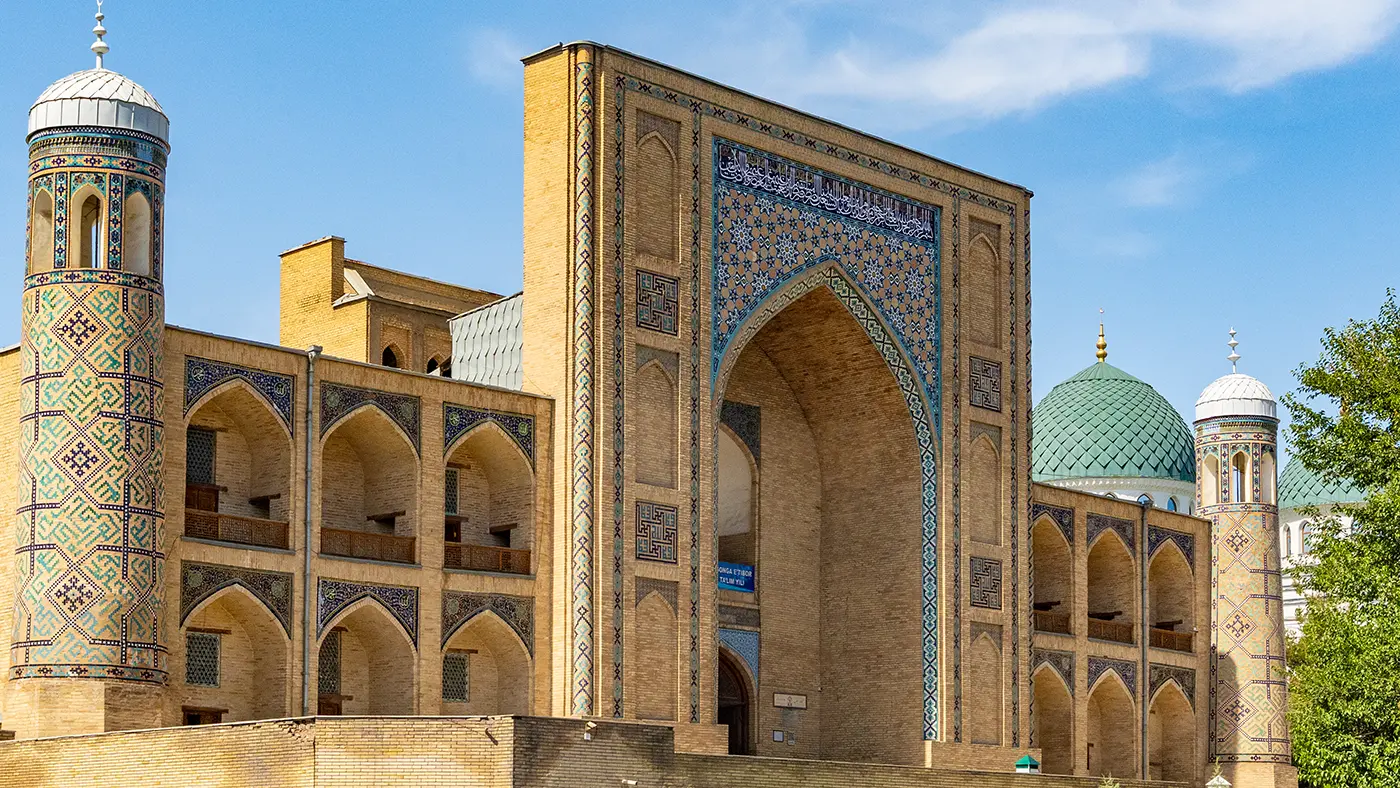
Kukeldash Madrasah
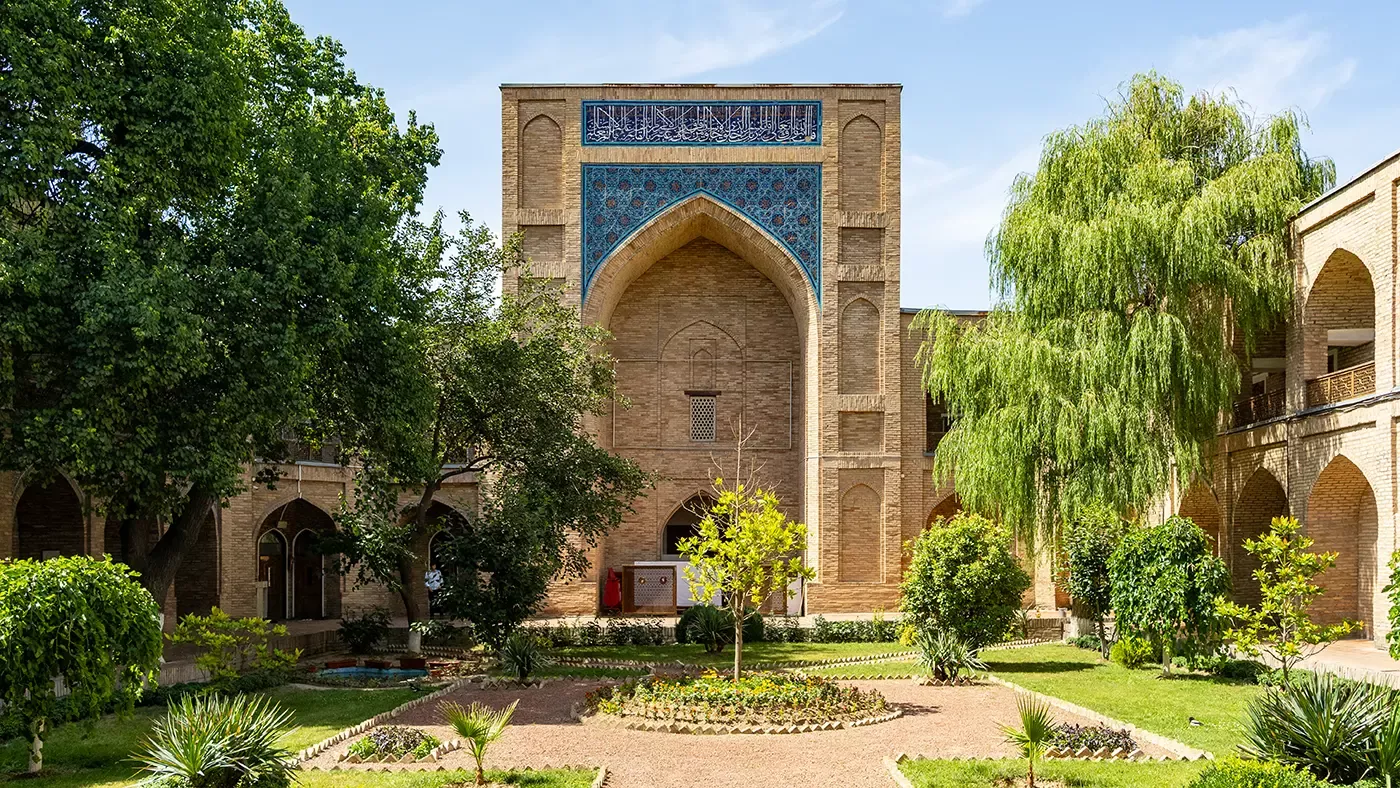
The Kukeldash Madrasah is an architectural monument of the 16th century. The structure is located near the Chorsu Bazaar, one of the most popular bazaars in Tashkent among tourists.
History of the complex
The word "madrasah" refers to a Muslim secondary and higher school. Such institutions train religious figures, teachers, and civil servants. In the past, the Kukeldash Madrasah was considered a higher educational institution. It housed 38 cells, a study room, and a mosque.
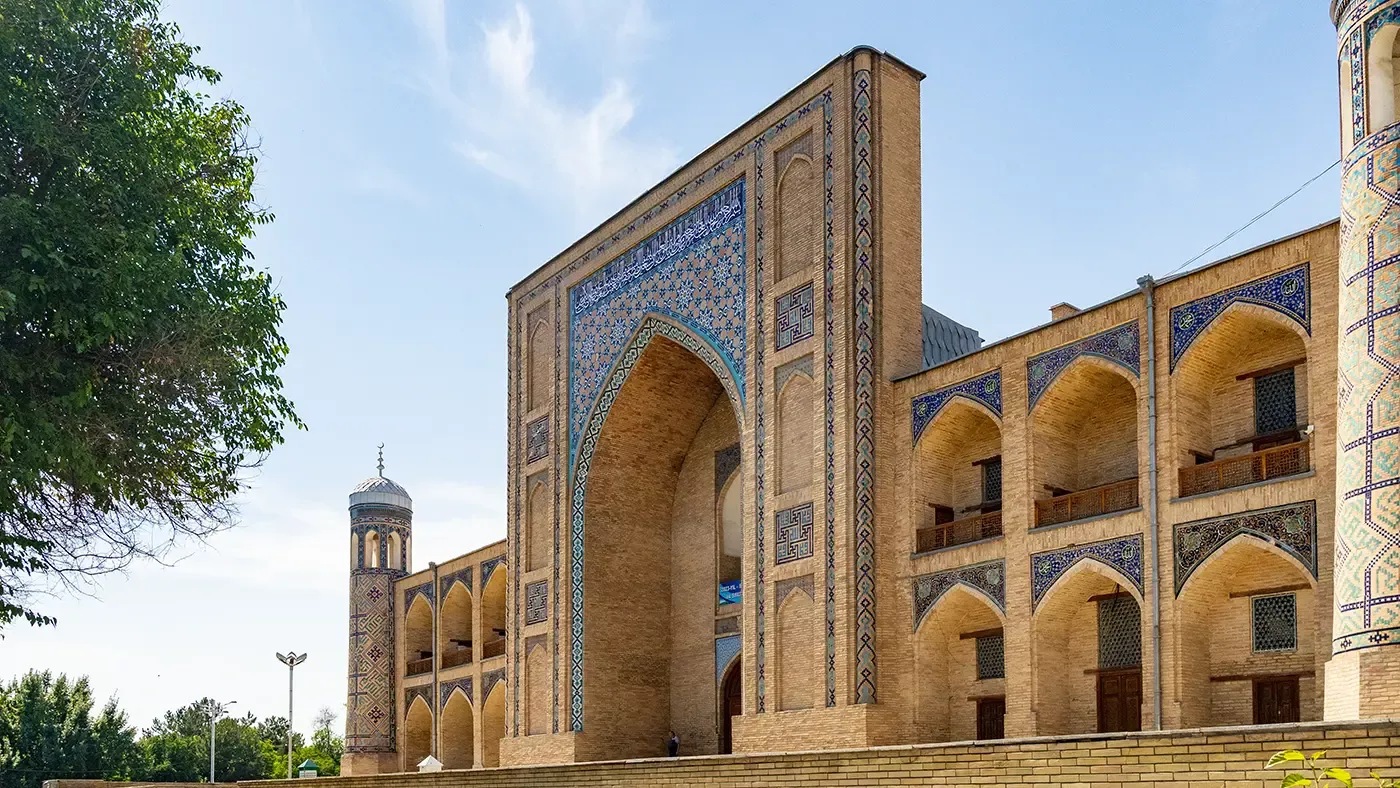
Since the 18th century, the Kukeldash Madrasah had been abandoned. The walls of the former educational institution housed a caravanserai — a resting place for merchants, often with storage facilities.
In old books, you can find several legends about this madrasah. One of them, for example, tells of a pistachio tree that grew on one of the domes for more than 300 years. Another says that in the past, unfaithful wives were thrown from the upper levels of the madrasah.
After the earthquakes in the second half of the 19th century, the madrasah practically turned into ruins, but over time it began to be restored.
Current state
In the post-Soviet period, the madrasah underwent major repairs. Today, the building is accessible to tourists. Now, just like before, the educational process is ongoing here, so the entrance to the main courtyard of the complex is periodically closed. However, visitors can take some panoramic photos, go up to the second floor, and look into the souvenir shop.
In Tashkent, unlike in Samarkand or Bukhara, for example, not so many monuments of ancient architecture have been preserved, and the Kukeldash Madrasah is a great place for anyone who wants to get acquainted with the culture and history of Uzbekistan.
You can continue your walk around the city, for example, on the tourist street of the Gulbozor mahalla, which is located a couple of minutes' walk from the madrasah.